on Google


One of Africa’s most captivating destinations, Botswana is renowned for its unspoilt wilderness, abundant wildlife, and vast landscapes. From the Okavango Delta to the Kalahari, driving in Botswana offers a unique and adventurous way to explore different terrains.
It allows you to discover remote regions at your own pace, providing the ultimate sense of freedom. At the same time it presents you with the unique chance to encounter Africa’s wildlife in its natural habitat.
For travellers seeking a truly unforgettable experience, Botswana-Experience offers guided self-drive tours that combine independence with expert local knowledge. This type of travel ensures safety while maximising wildlife sightings and exploration off the beaten path.
In this guide, you will learn about Botswana’s driving rules, safety considerations, road conditions, and essential preparation. Read on to find out about how to plan a rewarding self-drive adventure through one of Africa’s most extraordinary countries.
Botswana promises moments of awe and discovery, both for seasoned adventurers and those embarking on their first African journey. With careful planning and local guidance, your self-drive safari can become an unforgettable journey.
Experience one of the world’s last great wildernesses where every road leads to new encounters and stunning scenery.
What You Need to Know Before Driving in Botswana
This article will deal with essential information on driving in Botswana. Familiarise yourself with legal requirements, documentation, insurance, and border-crossing procedures to make sure you have ticked all the boxes.
Driving License and Legal Requirements
If you are planning a self-drive holiday in Botswana, you should be aware of the following legal requirements:
- Accepted Driving Licenses: UK, EU, and other recognised national licences generally accepted. However, we recommend you bring an International Driving Permit (IDP);
- Age Restrictions: For driving in Botswana, most rental companies require drivers to be at least 21 to 25 years old, with a minimum of one or two years’ driving experience.
- Required Documents: Apart from a valid driving licence, vehicle rental agreement, and proof of insurance, you will also need to present your passport.
- Cross-Border Considerations: If you are planning to cross the border to Namibia, South Africa, or Zimbabwe, ensure that the vehicle paperwork issued by your rental agency allows entry, and confirm insurance coverage for other countries. Some border posts may require additional permits, and rental companies often provide guidance for safe, legal cross-border travel.
Insurance, Vehicle Papers & Border Crossings
While driving in Botswana, drivers must carry valid insurance documentation and vehicle papers at all times. There are straightforward but essential border checks in place. These ensure that vehicles entering or leaving the country meet legal and safety requirements and all travellers are properly documented.
When crossing a border, travellers have to present passports, vehicle documents, and any other mandatory cross-border permits. Rental companies usually provide advice on insurance coverage for multiple countries and may assist with temporary import permits.
Ensuring all paperwork is in order will contribute to a smooth and safe experience at any border post.

Road Conditions and Terrain – What to Expect
Botswana’s roads vary from well-maintained tar highways to remote gravel tracks and rugged 4×4 routes. This makes for a good mix of both accessible travel and adventurous driving experiences in the country’s wilderness areas.
Tar Roads, Gravel Roads & 4×4 Tracks
Connecting major towns such as Gaborone, Francistown, and Maun, Botswana’s main tarred roads are generally in good condition.
Outside urban areas and in rural regions, secondary gravel roads are common. Here, surfaces can be uneven, dusty, or corrugated, requiring slower speeds and careful attention.
Within national parks and remote areas, tracks can be sandy, rocky, or otherwise impassable to standard vehicles, making 4x4s essential.
Road signs are usually clear on main routes but may be sparse in remote regions. While GPS works anywhere in the world via satellite, it can be unreliable in remote areas of Botswana.
Thus, offline and paper maps are thus crucial for backup, especially when venturing into remote areas.
Want to explore off the beaten path but without having to worry about signal and finding the right roads?
Then you may want to consider our guided self-drive safari tours. They come with a guide and support crew in a separate vehicle to enhance your experience and assist when needed.
Seasonal Changes & River Crossings
During the rainy season from November to March, driving in Botswana can be particularly challenging. Heavy rains can swell rivers and wash out roads, making some river crossings impassable without local knowledge.
Muddy, slippery tracks and occasional flooding require careful driving and sometimes detours, so timing and route planning are critical.
From May to October, during the dry season, roads are generally more accessible. However, sandy tracks and occasional dry riverbeds can still pose difficulties.
Seasonal changes dramatically affect which areas are reachable, so travellers should plan itineraries with these variations in mind. It is essential to check road updates, local conditions, and park access information before setting out.
Carrying recovery gear such as a shovel, tow rope, and traction aids is strongly recommended. For those unfamiliar with remote or wild routes, or those wanting to venture into areas not accessible for normal self-drive tourists, guided self-drive safaris provide expert support.
Support vehicles ensure safe navigation while still offering the freedom and adventure of exploring Botswana’s most untouched landscapes.

Road Safety, Etiquette & Common Hazards
Driving in Botswana requires awareness of wildlife, livestock, and local road conditions. Understanding road etiquette and safety measures is essential for a secure and enjoyable adventure.
Wildlife Encounters & Accidents
In a country as sparsely populated as Botswana, animals likely outnumber people and wildlife sightings along the road are common. It is also common for bucks, elephants and other species to block the road.
In such cases it is crucial to remain calm and stay in the vehicle. Always wait for the animal to leave the road – sudden movements or attempts to drive around animals can be dangerous.
In the event of an accident or collision with an animal, do not panic. Secure the scene, check for injuries, and contact local authorities or roadside assistance immediately.
Always keep emergency numbers handy, including your rental company’s support line. Reporting incidents promptly ensures proper assistance and legal compliance.
By being vigilant and driving at safe speeds you reduce the risk of wildlife-related accidents. This allows you to enjoy Botswana’s rich fauna responsibly and safely.
Road Safety Tips & Night Driving
Night driving in Botswana is not advisable. Especially outside of towns and larger settlements, roaming wildlife and livestock – combined with the lack of lighting – are real hazards. This is why driving after dark should be avoided at all times.
Maintaining safe speeds, observing road signs, and using proper overtaking etiquette are crucial for safety. You should also show courtesy to other vehicles, particularly on narrow or gravel tracks.
While police roadblocks are relatively frequent, they are generally conducted professionally and courteously. Remain calm, follow instructions and provide the requested documents.
Within national parks, extra caution is required: speed limits are strictly enforced to protect wildlife. Drivers must remain alert at all times to avoid disturbing animals or causing accidents.
Careful planning, patience, and respect for local rules help ensure a safe journey through Botswana’s diverse landscapes.
Breakdowns, Getting Stuck & Roadside Assistance
If your vehicle breaks down or becomes stuck, remain calm and follow the guidance of your rental company. Their instructions are crucial, so it’s important to make sure you are hiring from a reputable company. Also ensure that they have equipped you with all the essential emergency gear including shovel and recovery boards.
If you are planning to explore remote areas, you should also carry a satellite phone. Always check that your vehicle is in good condition before setting out, to minimise the risk of problems in isolated areas.
Most established rental services provide 24-hour assistance and advice for challenging conditions. Joining a guided self-drive safari offers additional security, with support vehicles and guides on hand to assist in tricky situations.
Being prepared and working with professional operators ensures a safer, more enjoyable journey while exploring Botswana’s remote and wild regions.

Navigation, Fuel, and Supplies on the Road
Proper planning is essential when driving in Botswana, as navigation, fuel availability, and supplies can vary across remote regions. Understanding these factors ensures a safe and enjoyable self-drive safari experience.
GPS, Google Maps & Reception
GPS devices and apps such as Google Maps are generally reliable for main roads and towns in Botswana. However, coverage can be limited in remote areas, including national parks and isolated tracks.
It is a good idea to download offline maps and use navigation apps that work without mobile reception. Tools such as Maps.me or Gaia GPS help you navigate regions where signage is limited and mobile coverage unreliable.
In order for these to function, you shouldn’t forget to bring a portable charger for electronic devices.
Many travellers also carry traditional paper maps as a backup. Knowing your route and distances in advance as well as planning rest stops is recommended.
If you join a guided self-drive safaris, local experts provide essential route knowledge and support. They ensure you can navigate even the most remote wilderness areas with confidence – without unnecessary detours or getting lost.
Fuel Availability & Food Supplies
Distances in Botswana can be vast, and outside of towns and safari hubs, petrol stations are few and far between. In order to not run dry, it is essential to plan your fuel stops carefully and maintain a full tank. It is also advisable to carry an extra tank when entering remote regions.
Apart from fuel, you should also stock up on water, food and other essential supplies. Once you leave urban areas behind, opportunities to purchase provisions are limited, so you should always plan ahead.
Want to ensure that fuel and food are available when needed, without having to stress about proper preparations? Why not join one of our guided self-drive tours with a maximum of six vehicles plus support vehicle?
These allow you to focus on the journey – and you can enjoy Botswana’s spectacular landscapes and wildlife without unexpected interruptions.

Vehicle Rental, Itineraries & Travel Planning
Selecting the right vehicle and carefully planning your itinerary are essential if you want to enjoy driving in Botswana. With the right itinerary, a self-driving safari is a rewarding adventure.
Choosing the Right Vehicle
In remote regions and national parks, where the terrain is rocky or sandy, roads are often replaced by tracks. So if you want to experience Botswana’s landscapes in their full diversity and splendour, a 4×4 vehicle is strongly recommended.
A well-equipped 4×4 provides safety and freedom. Both of these are necessary to confidently navigate Botswana’s unspoilt wilderness and reach even the most remote safari destinations.
Key features to look for in a rental include dual fuel tanks, high ground clearance, and durable tyres. Make sure it also comes with basic recovery gear such as a shovel, traction boards, and a tow rope.
Rental packages typically include insurance, a detailed vehicle briefing, and essential equipment like spare tyres and a first-aid kit.
Choose an established and reputable rental company to ensure that the vehicle is well-maintained and supported in case of breakdowns.
Planning Your Self-Drive Itinerary
When planning a self-drive safari in Botswana, consider popular routes that allow you to make the most of your trip. Look for destinations that are diverse and capture the country in all its natural beauty and contrast.
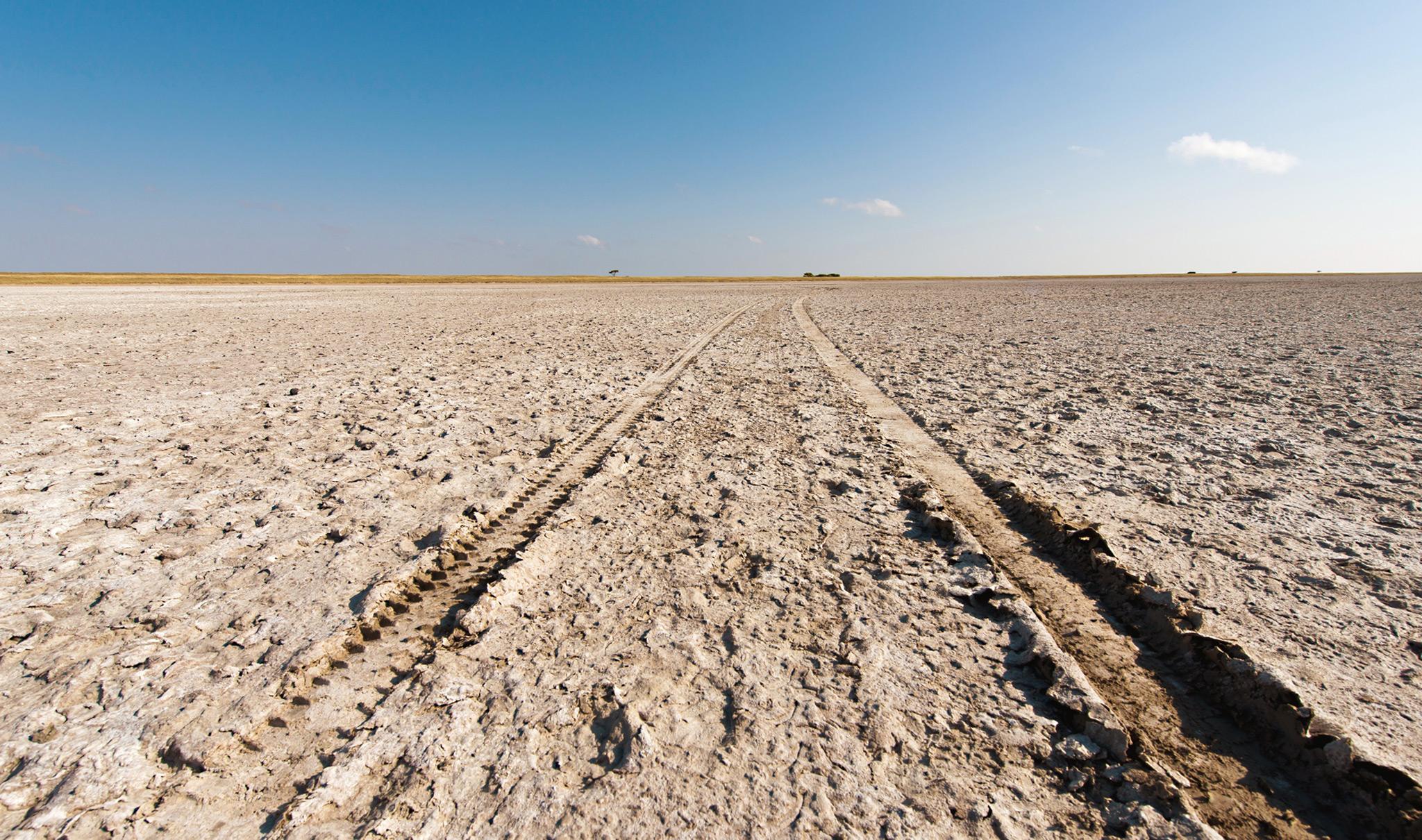
Apart from the Okavango Delta, these include Moremi Game Reserve, Chobe National Park, Makgadikgadi Pans, and Nxai Pan.
Consider that certain areas may not be accessible by car, so planning your route well is important. In addition, careful time estimations are crucial: While distances may appear short on the map, travel times can be long due to road conditions and wildlife crossings.
Permit requirements for national parks should be checked in advance, and it is advisable to book campsites or lodges early.
Favourite Self-Drive Tours

Highlights of Namibia and Botswana
Places Sossusvlei, Kalahari, Etosha NP, Chobe NP, Okavango Delta, Victoria Falls
from 7,170 USD per person sharing
Unchartered Trails of Botswana – 4×4 Offroad Safari
Places Old Hunters Road, Makgadikgadi & Nxai Pans, Moremi Game Reserve & Khwai, Savuti Region & Chobe NP
from 6,850 USD per person sharing
Guided Self-Drive Safari Tours – The Best of Both Worlds
With our guided self-drive safari tours, we combine the freedom of self-driving with the reassurance of expert support. These tours are designed to access remote wilderness areas that are often off-limits to standard self-drivers.
This allows us to create a truly immersive and unforgettable adventure with unparalleled wildlife encounters in untouched landscapes.
Imagine a 4×4 convoy of no more than six vehicles making its way along sandy tracks and through open plains. An expert guide and a support vehicle are always close by, ready to assist with recoveries and advice.
Apart from a shared camaraderie that makes the journey enjoyable and safe, there are other benefits: While local expertise ensures you spot the best wildlife, insider knowledge opens doors to hidden corners of the parks.
Optional activities such as mokoro excursions and boat cruises provide further variety, showcasing Botswana’s waterways and birdlife.
Our guides know the terrain like the back of their hands. Their guidance ensures confident driving across even the most remote areas as well as safe river crossings.
Compared with standard self-drive holidays, these guided tours are wilder, more intense and adventurous, but also less stressful. They allow you to focus on the road ahead and on the overall experience rather than logistics.
At the same time, you are safe in the knowledge that help is always close at hand.
These tours are more than just a road trip. With freedom, safety, and a deep connection to nature, they offer a unique way to explore Botswana’s unspoilt beauty. Get ready to unleash your spirit of adventure and create memories that will last a lifetime!
A Trip You’ll Never Forget
Embarking on a guided self-drive safari through Botswana is the kind of adventure that stays with you for a lifetime. Picture yourself behind the wheel of a 4×4, exploring the country’s raw and diverse landscapes.
Ranging from shimmering salt pans to ancient baobab forests and lush floodplains, Botswana is one of Africa’s last true wildernesses. Here, you’ll find an unparalleled sense of space, solitude, and adventure, with new discoveries awaiting behind every turn.
Thanks to expert guides leading the way, you can immerse yourself in the journey. With every river crossing and off-road stretch expertly handled, you can relax and savour the full thrill of the adventure.
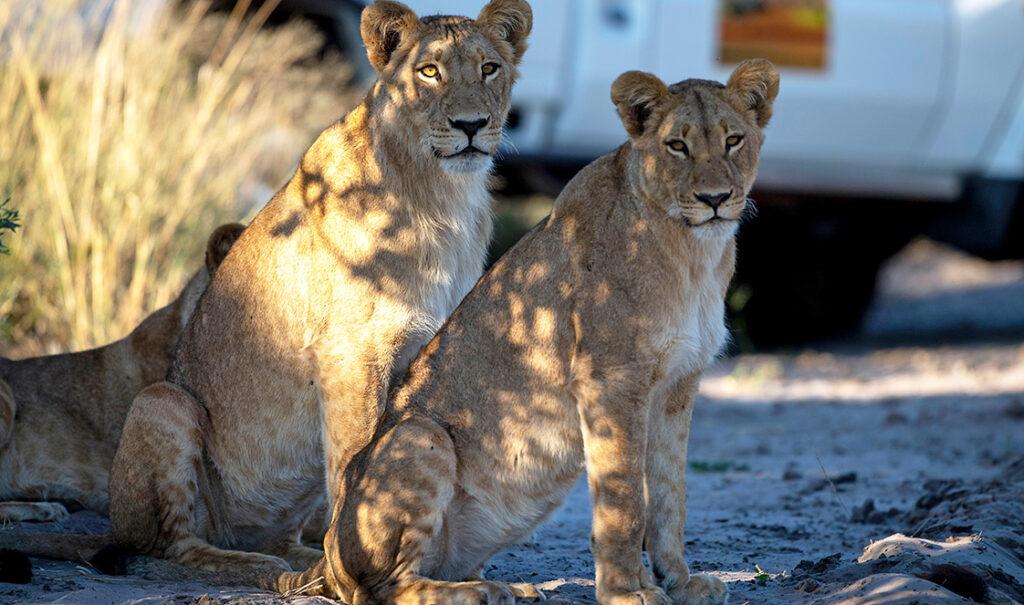
Africa’s wildlife provides the soundtrack: The hooves of zebras crossing the plains joined by the trumpeting of elephants and the distant roars of lions. Each day brings new discoveries and encounters, from dramatic landscapes to serene moments in the heart of the wilderness.
Evenings are spent under a vast canopy of stars, surrounded by the sounds of the African bush. A tour like our 15-day Unchartered Trails of Botswana is not just a holiday. It is a rare chance to reconnect with nature and discover your wild side.

FAQs About Driving in Botswana
Do I need a 4×4 for driving in Botswana?
Yes, a 4×4 vehicle is strongly recommended for most areas, particularly national parks, remote tracks, and sandy or rocky terrain.
While main tarred roads are accessible to standard vehicles, many safari destinations, including the Okavango Delta, require off-road capability. A 4×4 provides safety, higher ground clearance, and the ability to tackle river crossings, muddy tracks, and uneven surfaces.
Vehicles equipped with dual fuel tanks and basic recovery gear are ideal for self-drive safaris.
What side of the road does Botswana drive on?
In Botswana, drivers use the left-hand side of the road. This can feel unfamiliar for those used to driving on the right, especially on narrow gravel tracks or when overtaking.
Travellers should stay alert at intersections and roundabouts, take extra care when overtaking, and keep left at all times. Seatbelts are mandatory for all occupants, and speed limits must be observed.
Careful attention to traffic infringements, road conditions, and wildlife on or near the road is essential for safe driving.
Is it safe to drive in Botswana at night?
Night driving in Botswana is not recommended due to roaming wildlife, livestock, and poorly lit roads in rural areas. Visibility is limited, and animals may appear suddenly on tracks.
It is safer – and more scenic – to travel during daylight, arriving at lodges or camps before sunset. In national parks, driving after dark is strictly prohibited for safety reasons, but also to protect wildlife.
Even on main highways, caution is needed after dark, as unlit stretches and unexpected obstacles can pose serious risks.
What documents do I need to drive in Botswana?
Drivers must carry a valid driving licence, an International Driving Permit (IDP) if applicable, passport copies and vehicle rental documents. Furthermore, proof of insurance is required, and it is advisable to keep both digital and physical copies of all documents.
For cross-border travel, ensure all vehicle papers and permits allow entry into neighbouring countries. Having all documentation readily accessible is essential for smooth border crossings and interactions with traffic police or park authorities.
Check with your rental company regarding any additional permits required for specific parks or remote areas.
How are the roads and fuel availability in Botswana?
Main tar roads are generally well-maintained, while secondary gravel roads can be uneven, corrugated, or sandy. Fuel stations are found in major towns and safari hubs, but distances between them can be significant.
You should plan fuel stops carefully and carry sufficient food, water, and supplies if going to remote areas. Guided self-drive tours provide logistical support, ensuring fuel and provisions are available along the route, reducing stress and enhancing safety.
Can I cross borders with a rental vehicle in Botswana?
Yes, as long as you have the rental company’s permission and appropriate cross-border documentation, you may cross borders. Many rental agreements require prior notice and additional fees.
Drivers must carry vehicle papers, insurance, and temporary import permits when entering Namibia, South Africa, or Zimbabwe. Border checks are generally straightforward, but following legal requirements ensures a smooth crossing.
Guided self-drive tours often manage cross-border logistics, allowing travellers to explore multiple countries safely and confidently.

Final Tips for Driving in Botswana
When driving in Botswana, safety, preparation, and respect for wildlife and the environment are paramount. Plan your route carefully, carry essential supplies, and remain vigilant for animals on the road.
A well-equipped 4×4 and knowledge of seasonal conditions make the journey both safe and rewarding.
Ready to explore Botswana behind the wheel? Expert guides provide insider knowledge, logistical support, and access to remote wilderness areas, enhancing both safety and enjoyment.
Guided self-drive tours allow for a deeper immersion, while they also offer a maximum level of flexibility. You’ll be able to discover hidden gems, enjoy scenic viewpoints, and encounter wildlife in its natural habitat without compromising safety.
Discover our guided self-drive safari tours and self-drive holidays to plan your dream adventure. For those still unsure if they would rather go on a hands off 4×4 trip, check out our Blog “Botswana 4×4 Trips” to get the full picture.
Contact our experienced travel experts to find out more about each option and tailor your itinerary for an unforgettable journey.
Author: Christina Leitner