on Google


While they may not be part of the famed “big five”, African wild dogs are one of the most special – and exhilarating – predators to encounter on safari.
Elusive, lightning-fast, and remarkably loyal as they are, it is no surprise that these endangered carnivores are a highly sought-after sighting among wildlife enthusiasts.
To counter dwindling numbers, Botswana has invested in long-term wildlife monitoring, anti-poaching efforts, and community-based conservation programmes.
With its vast, protected wilderness areas and low-impact tourism model, the country offers some of the best opportunities to spot African wild dogs in their natural surroundings.
In this guide, we’ll introduce you to this animal with its striking coat and highly social behaviour, and explain why it is so unique. We’ll introduce the best places to see wild dogs in Botswana, share tips on increasing your chances, and let you in on some fascinating facts that will deepen your appreciation for this remarkable species.
Meet the African Wild Dog: Nature’s Ultimate Team Player
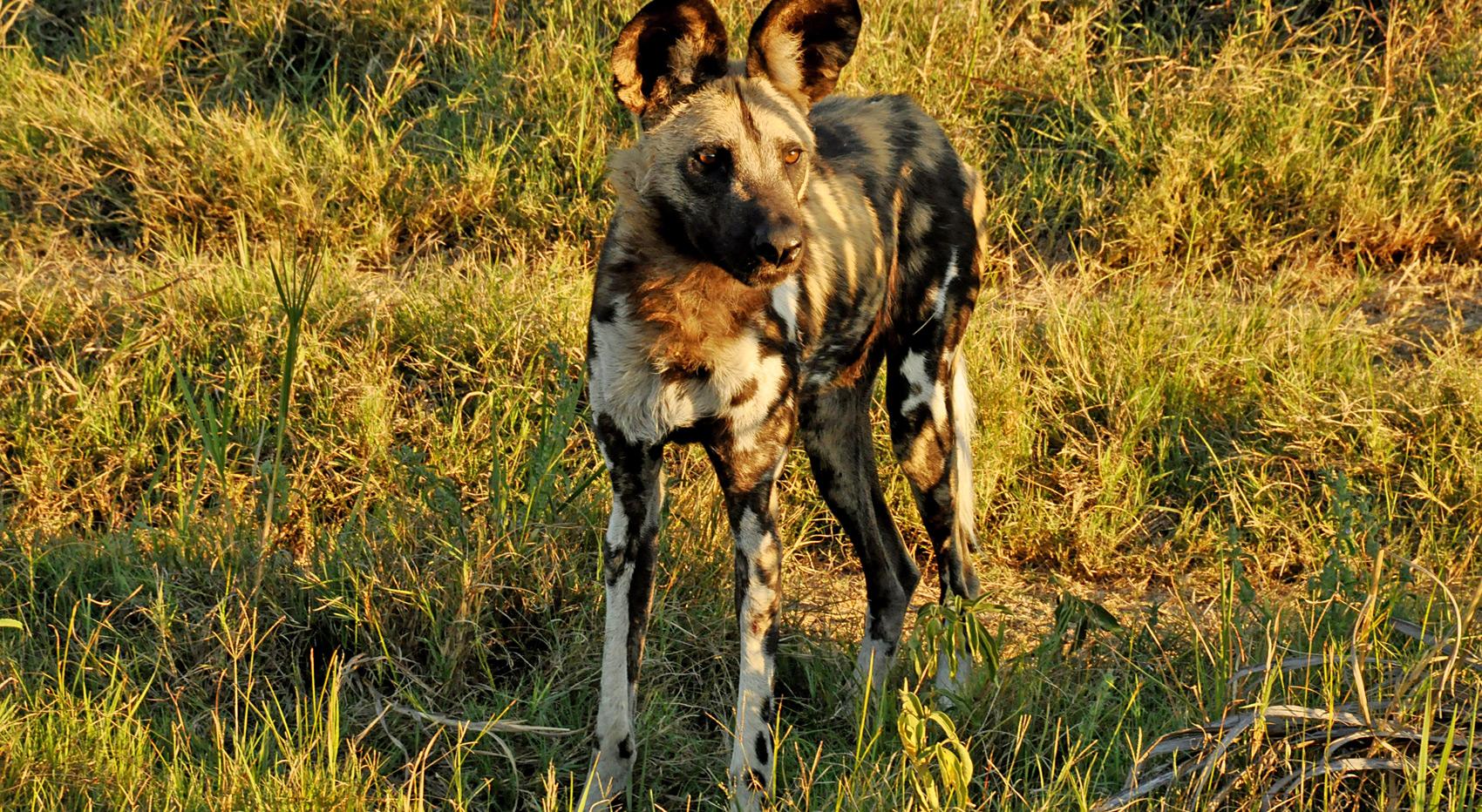
The African wild dog (Lycaon pictus), also known as the painted wolf, or African hunting dog is one of Africa’s most distinctive predators. Instantly recognisable by their mottled, uniquely patterned coats of black, brown, white, and tan, wild dogs are built for endurance – they are lean, long-legged, fast, and thus: elusive.
With tightly knit packs typically ranging from 6 to 20 individuals, they live in highly social structures.
At the heart of every pack is an alpha breeding pair. It is supported by the rest of the group – including older siblings – in raising and protecting their pups, in bringing food and defending the den.
While this communal care may be one of the most remarkable aspects of wild dog behaviour, their hunting strategy stands out as a masterclass in teamwork.
Relying on stamina, speed, and coordination, the pack works together to chase and exhaust any prey they have set their sight on, such as impala and kudu.
Their complex and elaborate communication system is another astonishing fact about African wild dogs. Apart from high-pitched twittering calls, it includes body language and tail signals, and they often greet each other with enthusiasm after separation.
Because of their strong bond, wild dogs rarely show aggression within their pack.
This combination of outstanding loyalty, cooperation, and care makes the African wild dog not only an efficient hunter – with a success rate that is often far higher than that of other predators – but also one of the most emotionally engaging animals and a joy to observe in the wild.
Conservation Status: A Race Against Time
Not least due to myths and misconceptions, wild dogs are one of Africa’s most endangered large carnivores. There are fewer than 6,000 individuals remaining in the wild. As their numbers continue to decline across most of the continent, Botswana remains a vital refuge.
Wild dogs have a need for large territories. This makes habitat loss from human expansion one of the main threats to their survival. It also comes with an inherent potential for conflict with livestock farmers, and the spread of diseases such as rabies and canine distemper from domestic dogs.
Here, Botswana’s strong conservation record makes a real difference. The government has designated extensive protected areas such as the Okavango Delta and Moremi Game Reserve, providing the space wild dogs and other wildlife need to roam.
At the same time, anti-poaching initiatives and partnerships between government, conservation NGOs, and local communities also play a crucial role.
The combination of these wildlife conservation efforts has turned Botswana into one of the last strongholds where wild dogs can be seen regularly in the wild.
With numbers estimated at around 1,000 individuals, the country is home to one of the largest and most stable population sizes in all of Africa. However, in order to ensure their future survival, continued vigilance and support are essential.

Best Places to See Wild Dogs in Botswana
For those eager to see African wild dogs in their natural habitat, Botswana is the place to go. We offer expertly guided safaris through the country’s prime territories.
With open terrain and high game density, Khwai Concession is a top contender amongst the hotspots for wild dog sightings. As off-road tracking is permitted, guides are able to follow packs more closely. The region is frequented by lodges as well as mobile safaris.
Moremi Game Reserve is another excellent location with good chances of wild dog sightings. Particularly around the Xakanaxa region and during the denning season from June to August, when wild dogs stay closer to one area.
Botswana’s premier safari region, the Okavango Delta, is known for its rich diversity of wildlife thanks to its year-round water supply. Stable wild dog population sizes can be found in the Delta’s northern and eastern regions with their varied habitats.
Lastly, the Savuti region in Chobe National Park is known for its large elephant herds as well as its dramatic predator interactions. Wild dog and lion encounters are relatively common and offer a thrilling experience for any wildlife enthusiast.
Recommended Safaris
To maximise your chances of seeing African wild dogs in Botswana, consider one of the following safaris with, all of which are expertly curated.
Small Group Lodge Safari – Chobe & Okavango Delta
Covers Chobe, Moremi, Khwai – great for sightings
This safari is ideal for those seeking excellent game viewing without wanting to forgo comfort. Covering Chobe National Park, Moremi Game Reserve, and the Khwai Concession, the itinerary includes three of the best areas for wild dog sightings in Botswana. You’ll stay in cosy lodges and travel with knowledgeable guides who understand wild dog behaviour. View tour!
Small Group Mobile Camping Safari – The Great North Route
Immersive safari in the wilderness of northern Botswana
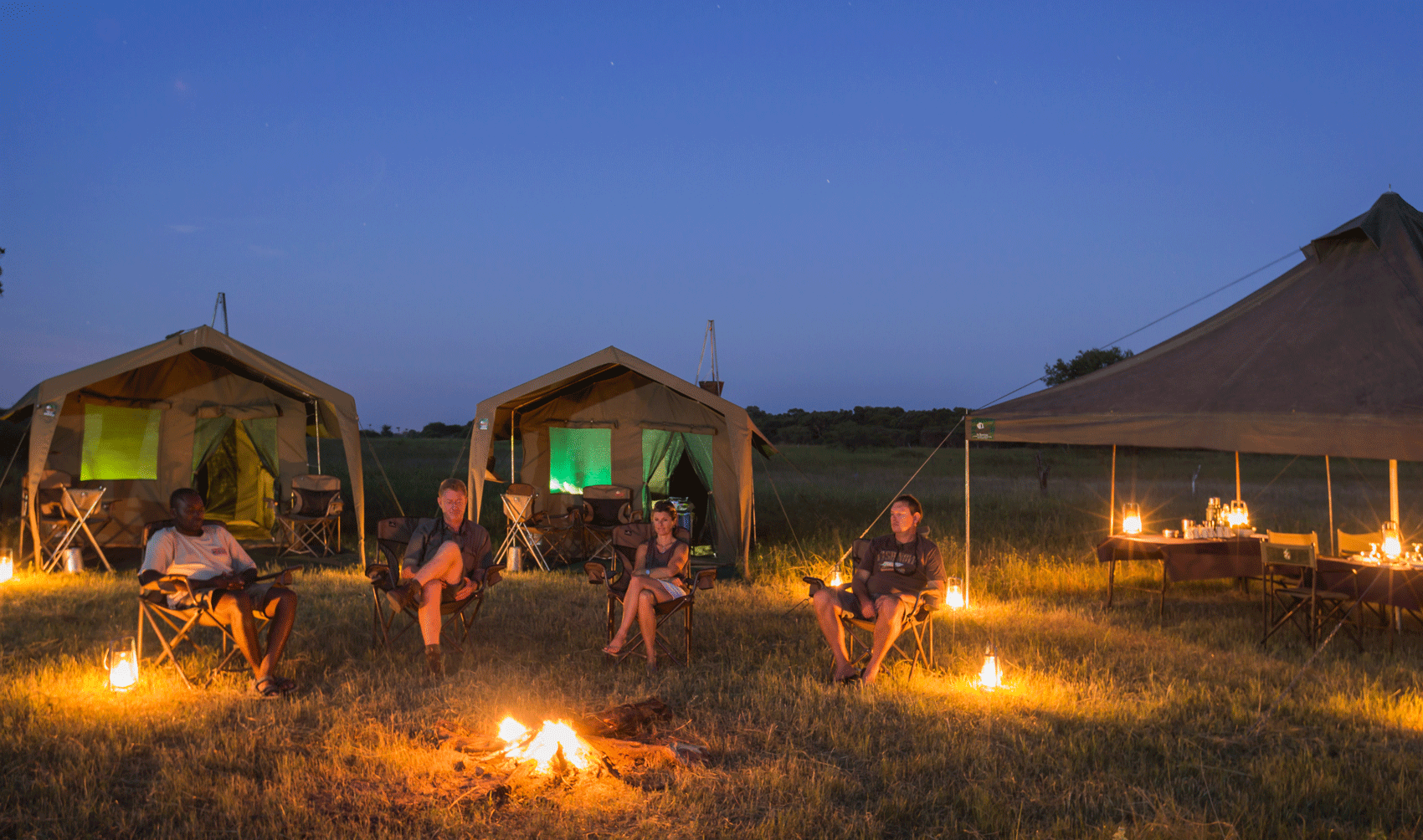
If you are looking for a more immersive experience, this adventurous trip takes you deep into remote wilderness areas in northern Botswana. There you will be staying at mobile camps surrounded by nature. It’s a favourite for wildlife photographers and safari purists. View tour!
Tailor-made Safaris
Tailor-made safaris offer ultimate flexibility for all those preferring a bespoke experience. Design your own itinerary to suit your interests, pace, and comfort level, and travel into remote wild dog territories accompanied by expert guides. These experiences are perfect for wildlife enthusiasts wanting to focus on this rare predator. Start planning!

Safari Tips: How to Maximize Your Chances of Unforgettable Encounters
Seeing African wildlife such as the wild dog in its natural habitat is a rare and unforgettable experience. But as these predators are known to be elusive, patience and the right timing, not to mention thorough planning, are prerequisites.
For the best chance of sightings, travel during the dry season (May to October) when vegetation is sparse and animals gather around water sources.
June to August is denning season and packs remain in a specific area to raise their young. This is the best time of year for increased chances of seeing pups.
Tailor-made wild dog safaris allow you to explore remote territories with an expert guide who understands the animal’s distinct movement patterns and behaviour.
Remember: sightings are never guaranteed, so stay patient and alert. In addition, avoid wearing bright colours or making loud noises, as these can scare the animals off. A respectful, quiet approach will always increase your chances of a memorable encounter.
Tours you might enjoy:

The Great North Route
Places Moremi Game Reserve, Khwai Area, Savuti Region, Chobe National Park
from 4,930 USD per person sharing
Frequently Asked Questions About African Wild Dogs
Do African wild dogs attack humans?
Wild dogs are shy, cautious animals and typically avoid human interaction unless they feel threatened.
What size are wild dogs?
The average weight of an adult is 20–30 kilograms. They have an approximate hight of about 60–75 centimetres at the shoulder. They are lean, long-legged, and built for speed and stamina.
How fast are African wild dogs?
Wild dogs can reach speeds of up to 60 km/h, making them some of the fastest predators in Africa. Their success lies in endurance and teamwork during the hunt.
Are painted wolves related to hyenas?
They belong to the Canidae family, while hyenas are part of a separate family called Hyaenidae. Despite superficial similarities, they are not closely related.
Do any predators prey on painted wolves?
Lions are known to kill wild dogs, particularly when defending their own territory. Hyenas may also steal their kills, but don’t usually hunt adult wild dogs.
What is the average life span of an African wild dog?
In the wild, African wild dogs typically live around 10 years, though many don’t reach this age due to a variety of threats.
Do painted wolves in Botswana fight lions?
While they generally avoid confrontation, wild dogs may stand their ground or fight lions if defending their pups or territory. However, lions are a significant threat.
Do African wild dogs bark?
They don’t bark like domestic dogs. Instead, they make a variety of unique vocalisations, used to coordinate the pack.
Are they tame?
Wild dogs are highly social, endangered animals that require complex pack dynamics and large territories to thrive. They cannot be tamed.
How long do the pups stay with their mums?
Pups stay in the den for about three months, during which time the entire pack helps feed and protect them. After this, they begin joining the adults on hunts.
Do African wild dogs pair for life?
Yes, they typically have a dominant alpha pair that mates monogamously for life. This bonded pair leads the pack. They are usually the only ones to breed, while the rest of the pack helps raise the pups.

Conclusion: Why You Should Make Wild Dogs Part of Your Safari
As one of Africa’s most thrilling and elusive predators, African wild dogs are a highlight of any safari. Encountering a pack on the move is a truly unforgettable moment, irrespective of whether you are a seasoned wildlife enthusiast or setting out on your very first wildlife adventure.
While the continent’s more famous “big five” attract the lion’s share of safari travellers’ interest – pun intended – sightings of more elusive animals like wild dogs offer a rare and deeply rewarding experience.
Their complex social structures and dynamics, high-energy hunts, and endangered status make each encounter feel like a privilege.
For those looking to go beyond the usual checklist and witness nature at its most raw and unpredictable, seeking out African wild dogs in Botswana adds a powerful and memorable dimension to any safari. To improve your chances of sightings, you may want to opt for an expert-guided or bespoke itinerary.
We are on the ground in Botswana and our travel experts will help tailor your journey to maximise the opportunity of seeing these incredible animals while ensuring a responsible and enriching adventure.
Get in touch with us for a no-obligation consultation today!
Author: Christina Leitner