on Google


At first, the floodplain seems empty. Then a red lechwe lifts its head. Another turns towards the reeds. Ears lock forward; bodies gather; the air changes. Somewhere beyond the silver water, a lioness is using a strip of dry ground no wider than a game-drive track.
This is the world of the Okavango Delta predators. Here, hunters do not simply follow prey. They negotiate channels, flooded grasslands, palm islands and routes that can disappear beneath water. Lions wade. Wild dogs reroute. Leopards turn wooded islands into ambush country. To understand them, we first need to understand the shifting map beneath their feet.
Where Exactly Is the Okavango Delta?
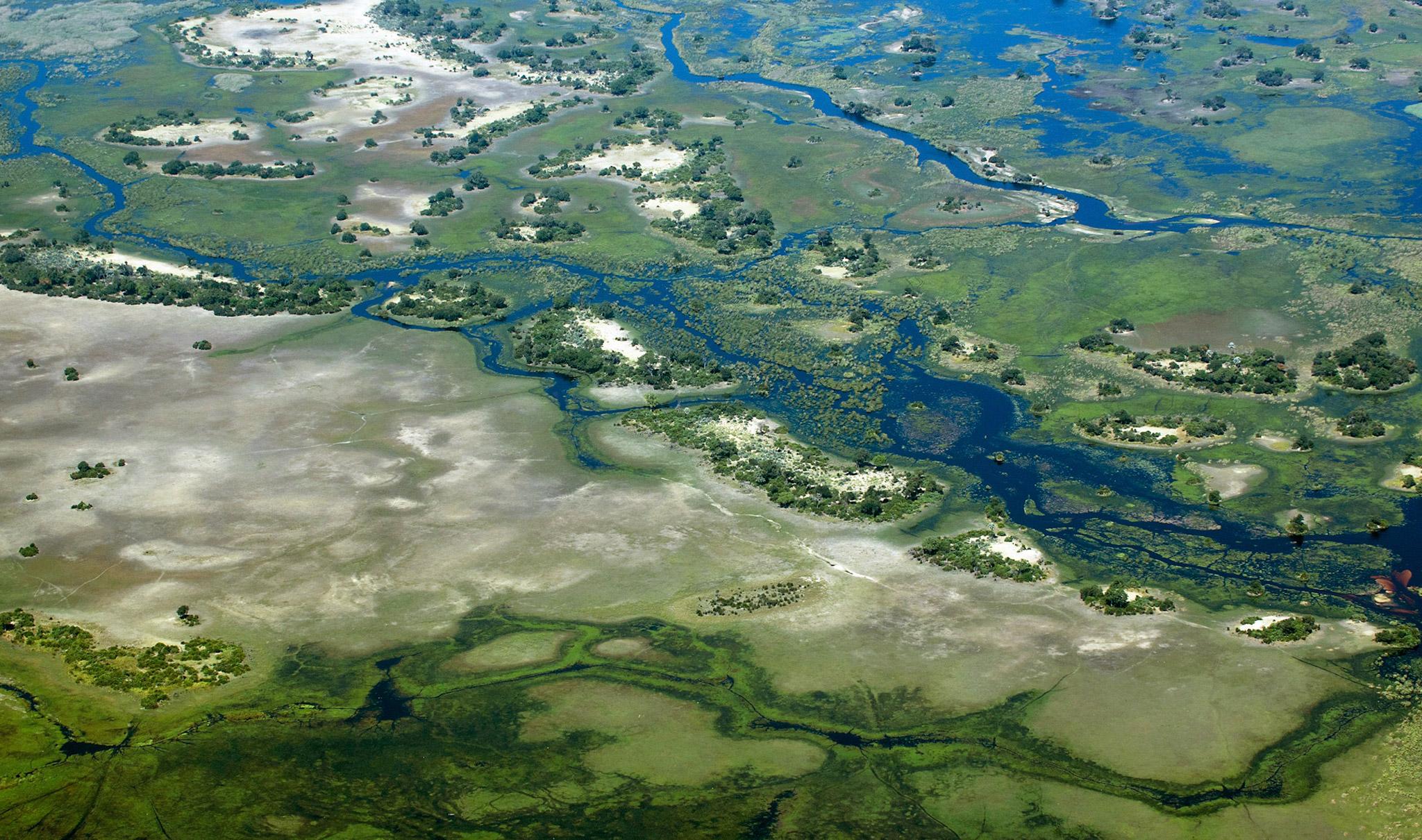
The Okavango is more than the postcard scene of mokoro canoes among water lilies. It is a vast inland alluvial fan in north-western Botswana, where water arriving from Angola spreads into channels, floodplains, grasslands and dry islands instead of reaching the sea.
The UNESCO World Heritage Site. covers more than two million hectares. Permanent swamp forms its heart; seasonal flooding transforms grassland around it. Tiny differences in elevation decide whether a place becomes a lagoon, a grazing lawn or a dry refuge.
Is Moremi Game Reserve Part of the Okavango Delta?
Yes. Moremi Game Reserve protects roughly 40 per cent of the World Heritage Site, including wet areas and drier country such as parts of Chief’s Island and the Mopane Tongue. It is not the whole Delta, but it holds an exceptional cross-section of its habitats.
Are Khwai and the Private Concessions Part of the Delta?
The Khwai River forms part of Moremi’s northern boundary. Community-managed land beyond it and private concessions around Moremi belong to the wider ecological Delta, even outside the reserve. Predators recognise none of these lines; packs and prides move between them.

How Does Water Shape Hunting in the Okavango Delta?
How Does the Annual Flood Change the Hunt?
Rain falling in the Angolan highlands takes months to reach Botswana, so the Delta is often fullest between June and August, during Botswana’s dry months. Water crosses old floodplains, splits grassland into islands and closes routes that were usable weeks earlier.
This changes where prey gathers and how hunters move. Lion research shows that high floods can shrink and fragment core habitat, particularly in the western Delta. Other work found smaller prides and lower reproductive rates in high-flood years. Water may bring prey closer, yet compress territories too.
The map is rewritten quietly. One morning there is dust beneath the tyres. A week later, the same track carries fish.
Do Okavango Delta Predators Actually Hunt in Water?
Sometimes, but they are not aquatic specialists. Lions wade through shallows and cross channels when prey or territory lies beyond. Certain prides tackle buffalo around wet floodplains. Hyenas cross inundated ground, while leopards usually exploit cover along island edges.
Wild dogs dash through shallows, but deep, open water is a serious barrier. Tracking research found it almost impenetrable to resident packs, forcing detours. Water can determine whether a hunt begins at all.
Which Predators Live in the Okavango Delta?
Lions: Powerful Hunters in a Watery Wilderness
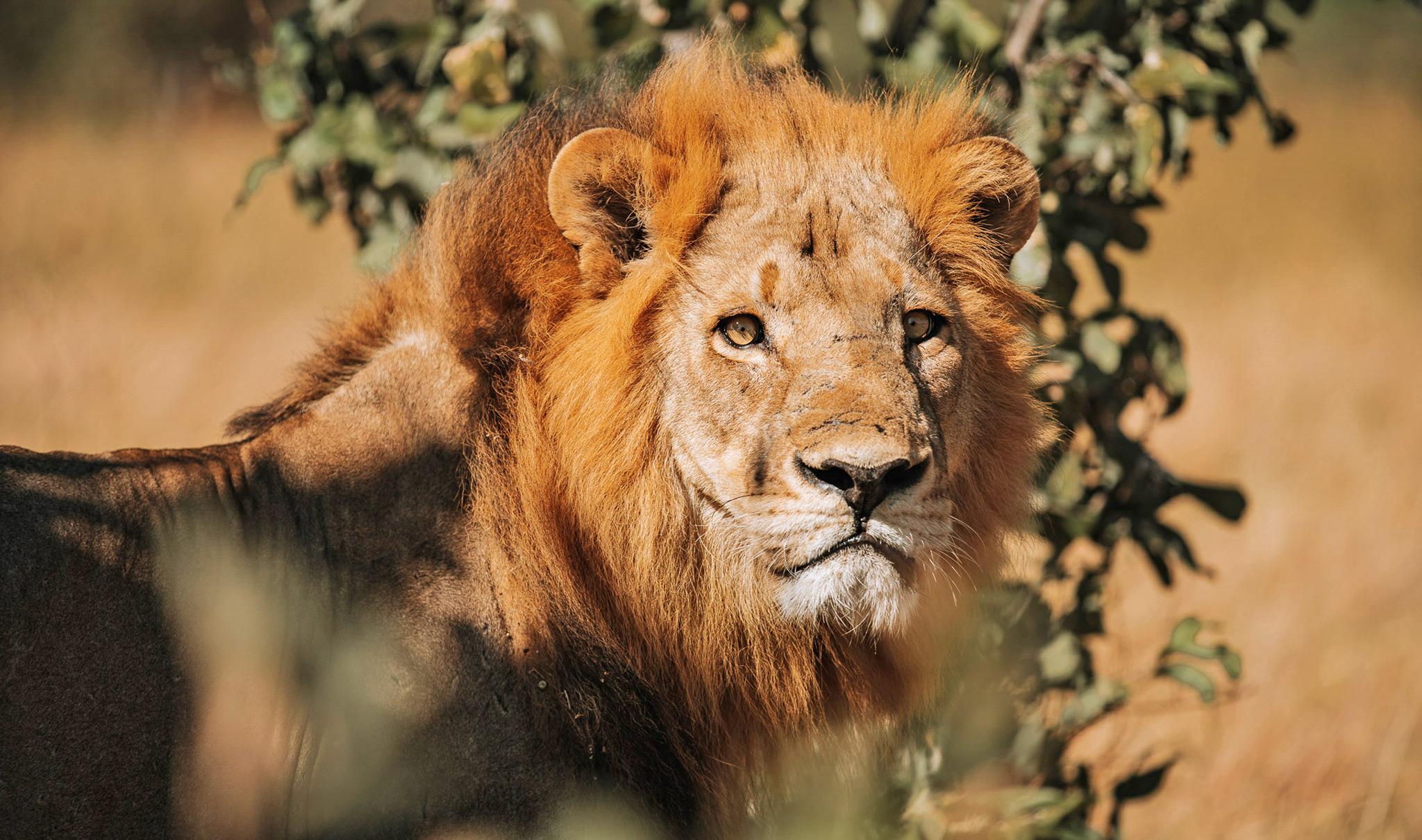
An Okavango lion may spend the afternoon flattened in tawny grass, gloriously idle. By dusk, that cat is reading wind, cover and the nervous geometry of a buffalo herd.
Botswana’s lions hunt animals from warthogs and antelopes to zebra and buffalo. Styles differ between prides and habitats. Lionesses may fan out in open country; around channels, reeds hide their approach, but one crossing can announce a lion with a splash.
When dry land contracts, neighbouring prides overlap more. A peaceful night can fracture into contact calls, answered by lions much closer than expected.

Leopards: Solitary Hunters of the Wooded Islands
Leopards favour riverine woodland, termite mounds and dense island margins. Success depends on getting close. Collar data from Delta males showed that most rapid runs were shorter than 100 metres, yet these secretive cats travelled about 11 kilometres a day on average, mostly unseen.
Trees offer rest and sometimes secure a kill, although leopards do not hoist every carcass. Their better defence is discretion: hunt alone, use broken cover, avoid unnecessary fights. A leopard can vanish on an island seemingly too small to hide a francolin.

African Wild Dogs: Built to Keep Moving
Wild dogs bring different energy. Before departure, sleeping bodies rise into wagging tails, whines and face-licking. Then come the sneezes. Researchers around Moremi discovered that these nasal bursts help form a quorum for group departure. Even a dominant dog does not always decide alone; enough “votes” move the pack.
African wild dogs in Botswana hunt cooperatively and range widely. Flooded channels funnel them towards crossings, move prey and divide usable habitat. At water’s edge, their vulnerability becomes visible: magnificent runners confronted by a road that has dissolved.

Spotted Hyenas: Hunters, Scavengers and Rivals
Calling a spotted hyena a scavenger is true in the same incomplete way that calling a lion a sleeper is true. Hyenas steal, but also hunt and test prey with persistence. In northern Botswana they favour grassland and mixed woodland over swamp.
Their whoops travel astonishing distances after dark. Tone and direction sketch an invisible drama: clan members gathering, a rival answering, perhaps lions on a carcass. Hyenas live by information as much as strength.

Cheetahs: Specialists of the Drier Plains
Cheetahs need room to see and accelerate, so favour open grassland, drier plains and floodplain margins over woodland or permanent swamp. They are less common in the wettest Delta habitats but remain part of its wider predator community.
Nor are they strictly daylight hunters. A Delta study recorded 32.5 per cent of cheetah feeding behaviour at night, with moonlight influencing activity during dry months. Cheetahs assess immediate danger, useful habitat and timing – a subtler survival strategy than speed alone.

Beyond the Famous Hunters: Crocodiles, Jackals and Small Cats
At a channel edge, only eyes and nostrils may betray a Nile crocodile. Yet not every crocodile is waiting for an antelope. Okavango research found that juveniles eat many insects and small invertebrates; fish become increasingly important as they grow, with mammals appearing more in larger animals’ diets.
Jackals work open areas, servals listen for rodents in tall grass, and caracals move through drier margins. They complete the picture of Okavango Delta wildlife: predation at every scale.

How Do Predators Compete in the Okavango Delta?
Do Lions Kill Wild Dogs in the Okavango Delta?
Yes. Lions may kill wild dogs without eating them. In Okavango playback experiments, lions strongly approached recordings of wild dog calls, while dogs retreated from lion roars. In one telling observation excluded from the main dataset, lions temporarily left a buffalo carcass to stalk the loudspeaker.
Speed is not enough. Wild dogs must detect lions early and retain escape routes across fragmented ground.
Do Lions and Hyenas Compete for Food?
Constantly, but results vary. Lions displace hyenas; a large clan can harass lions and sometimes take food in return. Numbers, age and urgency matter. So does water: a channel may block reinforcements or offer one side an easier retreat.
How Do Leopards Survive Alongside Lions?
Leopards reduce conflict through stealth and cover, but do not spend every hour fleeing larger competitors. Tracking of Delta males found little short-term attraction to or avoidance of lions, hyenas and wild dogs. Coexistence is subtler: remain difficult to detect and concede a carcass when defending it becomes too costly.

What Threatens the Predators of the Okavango Delta?
The Delta remains one of Africa’s great wildlife systems, but its predators move beyond protected cores. At those edges they encounter livestock, veterinary fences, roads and settlements. A lion following prey can become a threat to cattle overnight; retaliation may follow. Wild dogs dispersing between populations face human-dominated gaps as well as floodwater.
The water itself must also be protected. Upstream abstraction or major changes to flow could alter floodplains, prey concentrations and the dry corridors predators use. Disease adds another pressure. Research in northern Botswana found high exposure to canine distemper and parvovirus among domestic dogs, reinforcing the value of vaccination around wildlife areas.
Conservation here means more than guarding individual animals. It means keeping a vast, moving system connected and working with the people who share its boundaries.
Where Is the Best Place to See Predators in the Okavango Delta?
Moremi Game Reserve or a Private Concession?
Both can be excellent. Moremi offers diverse public-reserve habitats and strong chances of seeing lion, leopard, hyena and wild dog, particularly around productive areas such as Khwai, Xakanaxa and Third Bridge. A mobile safari through Moremi lets you follow these changes over several days rather than sampling one corner.
Private concessions usually host fewer vehicles and may offer activities such as night drives or guided walks, depending on the concession. A fly-in Delta safari can combine contrasting camps, wet channels for the classic Delta atmosphere and drier game-drive country for predator viewing. The better choice depends on budget, preferred pace and the experience you value most.

When Is the Best Time to See Okavango Delta Predators?
Predators are present all year. From June to October, cooler mornings, thinning vegetation and animals gathering near remaining water can make sightings easier, while the flood is spreading through much of the Delta. From November to March, the landscape turns green, antelope give birth and dramatic storms build; predators remain active, though thicker cover can hide them. April and May bring beautiful transitions and often fewer visitors.
No month guarantees a hunt. That uncertainty is not a flaw. It is precisely what makes the moment when a guide stops, listens, and turns off the engine feel so electric.
Experience the Wild Side of the Okavango Delta
The Okavango is not a stage where predators simply appear. It shapes every chase, pause and decision. Water opens paths, closes territories and gathers prey on islands that may vanish with the next flood.
To meet its hunters well, you need time, patient guides and an itinerary joining the right habitats rather than chasing a checklist.
Travel with Botswana Experience and we will help you choose between Moremi, Khwai and carefully selected private concessions, matching the route to the months and pace that suit you.
Come for the lions if you wish. Stay alert for the wild dog sneeze, the leopard’s shadow and the hyena calling beyond camp. Contact our safari experts and start planning your Okavango Delta journey today.
Author: Taher Nassrulla